Introduction
In today’s world, just a great idea is not enough to create a successful app. The bottom line is how effectively and quickly you can shape, test, and refine your idea before it reaches the users. That’s where app prototyping and rapid iteration come in. By keeping teams to conceptually sketch and continuously improve on the ideas, quick app prototyping directly strengthens the final product.
Understanding Application Prototyping
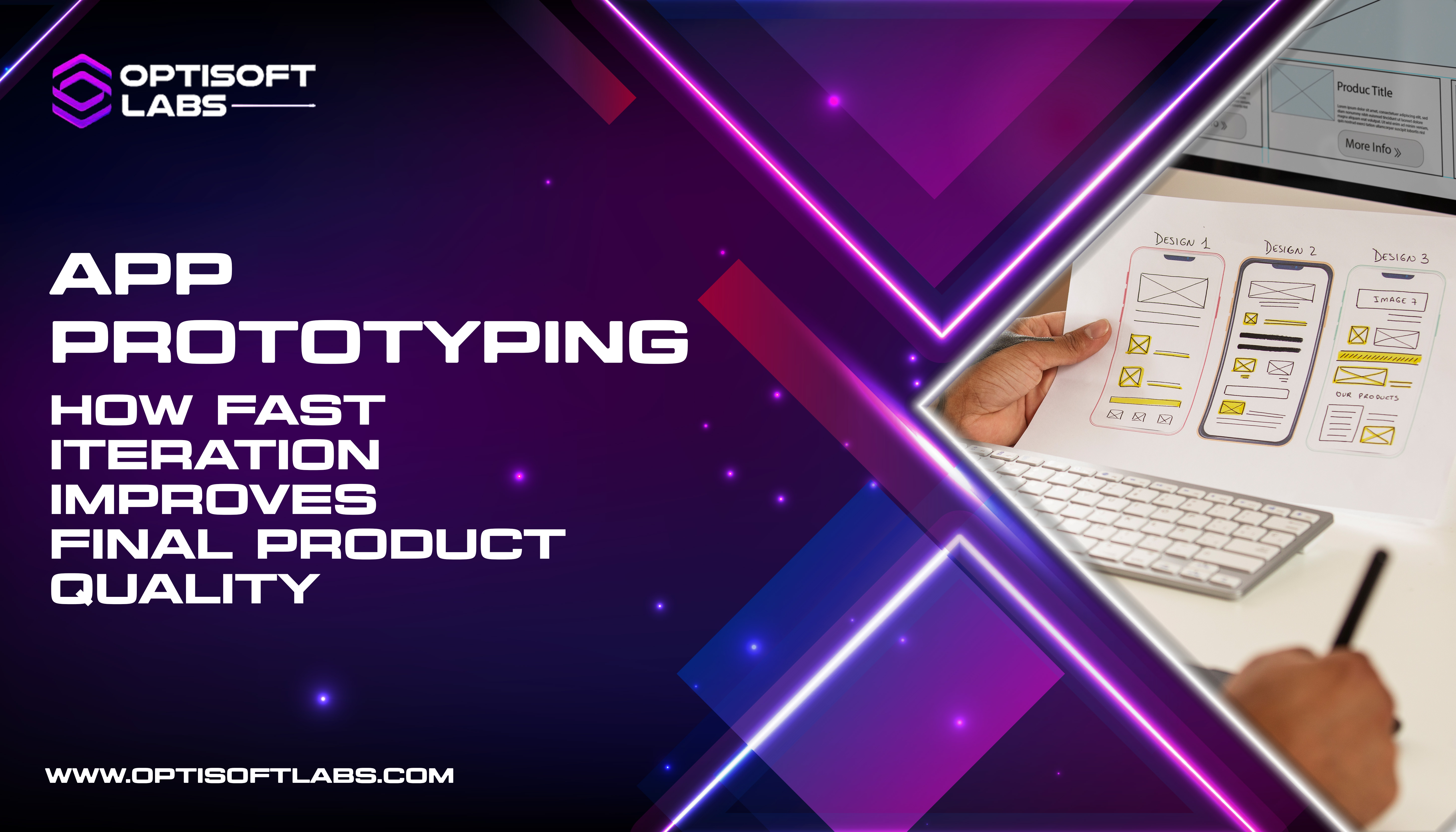
App prototyping involves crafting rough drafts of an application in order to map the structure, features, and flow. The prototypes can be simple sketches or almost-real apps you can tap around in. The goal isn't perfection but clarity, so stakeholders, designers, and developers alike know how the app should work.
Rather than investing months in full development, teams can quickly test ideas, spot problems, and check if they're on the right track. Early visibility reduces confusion, eliminates costly redesigns, and lays the foundation for a far better mobile user experience.
Why Speed Is Important
Improving fast just means creating, trying, learning, and fixing things in short bursts. Each prototype version grows from the feedback of users, clients, or internal teams. It makes development a learning process and not just a one-shot rollout. When you improve quickly, you see flaws early, navigation gets refined, and features get tuned based on real user behavior. That is especially important for mobile ux, where even tiny changes can make a big difference in how much people like the app. A bit faster feedback usually equates to fewer launch surprises, and the app feels natural to use from day one.
Improving Mobile UX Using Prototypes
One of the best things about app prototyping is its impact on mobile ux. Prototypes let designers experiment with layout, gestures, and how things react before writing any code that really matters. Users can tap through the app, see how things move, and point out what's annoying.
Early testing of the UX for mobile helps to weed out confusing flows, make the app easier for everyone to use, and keep things the same across all devices. This makes apps that are not just useful but also fun to use, which is a must in today's crowded app market.
Without Heavy Risk: Testing the Product
Improving fast helps you test your product well without risking too much. Instead of testing a fully built app, teams work with prototypes that are quicker and cheaper to adjust. Feedback from usability tests, A/B tests, or stakeholder reviews can be applied right away. This method allows teams to experiment with features, validate market fit, and make data-driven decisions. As a result, the final product is based on real info, not just guesses, increasing its chances of success after launch.
From Idea to High-Quality Product
Ultimately, app prototyping combined with fast iteration bridges the gap between vision and execution. This makes sure every part of development is valuable and matches what users want. By refining ideas early, teams avoid rework, reduce costs, and deliver higher-quality.
In short
Fast iteration through app prototyping is now a must for building successful digital products. By improving mobile UX, enabling smarter product testing, and encouraging continuous improvement, teams can confidently move from concept to launch. At Optisoft Labs, this approach helps turn ideas into apps that are easy to use and work great, high-performing applications through clarity, speed, and thoughtful iteration.
Related Blogs

The Synergy Between Logo Design and Web Design

How Integrated Design Boosts Brand Recognition